The State of Tinnitus: Global Data, Compiled and Sourced
This page exists as a single, sourced reference point — every number here traces back to a named study or health authority, linked in place, rather than being repeated secondhand from another blog. It's built from the same sources cited throughout this site's individual articles, compiled here specifically so journalists, researchers, and other sites have one clean place to reference tinnitus data without digging through dozens of separate pages. It will be updated as new research is published; see the "Updated" date at the top.
How many people have tinnitus
Estimates vary by country and survey method — covered in full in the article on global tinnitus prevalence — but there is one pooled estimate to anchor them against, and the national figures sit around it: tinnitus affects somewhere between 1 in 10 and 1 in 5 adults, depending on the population studied.
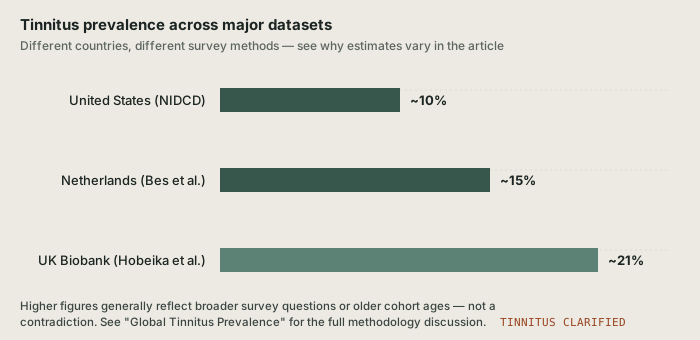
- Pooled worldwide: 14.4% of adults (95% CI 12.6–16.5%), from 83 prevalence studies published 1972–2021 (Jarach et al., 2022, JAMA Neurology) — more than 740 million adults, of whom more than 120 million experience tinnitus as a major problem. Severe tinnitus 2.3%; chronic tinnitus 9.8%; diagnosed tinnitus 3.4%.
- United States: roughly 1 in 10 adults (NIDCD/NIH)
- Netherlands: approximately 15% of the general practice population (Bes et al., 2024, PLOS ONE)
- UK Biobank cohort: just over 1 in 5 participants (Hobeika et al., 2025, Nature Communications), with roughly a quarter of those describing it as moderately or severely distressing
How prevalence changes with age
Every dataset that breaks results down by age shows the same pattern: prevalence rises steadily starting around age 40, peaks between roughly 65 and 79, and then declines somewhat in the oldest age groups.
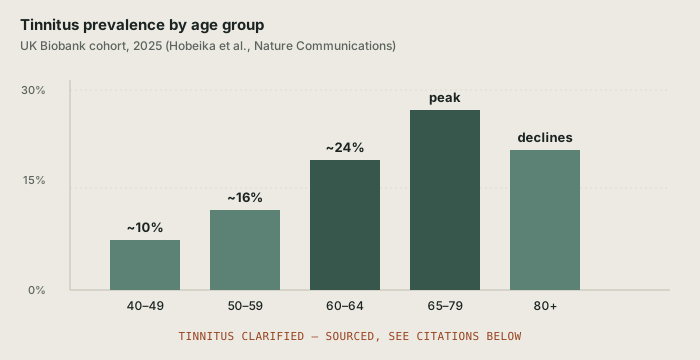
Source: Hobeika et al., 2025, UK Biobank cohort analysis, Nature Communications.
Sex differences
The pooled meta-analysis found no significant difference in prevalence by sex — 14.1% among men against 13.1% among women (Jarach et al., 2022). Single large cohorts can differ: men report higher overall tinnitus prevalence than women consistently from ages 40 through 79 in the UK Biobank data — but women in the same dataset reported greater distress when tinnitus was present, a distinction worth noting since prevalence and severity aren't the same measurement (Hobeika et al., 2025).
The bigger picture: global hearing loss
Since tinnitus and hearing loss are closely linked mechanistically (see the article on tinnitus and hearing loss), the World Health Organization's global hearing loss figures provide useful context for where tinnitus prevalence is headed as the global population ages.
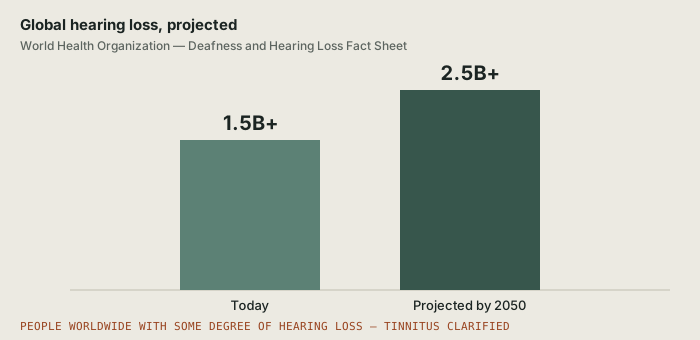
Source: World Health Organization, Deafness and Hearing Loss Fact Sheet.
Tinnitus and US veterans
Tinnitus is the single most common service-connected disability claim in the US Department of Veterans Affairs system. VA's own research pages, citing the Veterans Benefits Administration compensation report, put it at more than 2.3 million veterans receiving compensation for tinnitus in fiscal year 2020, against more than 1.3 million for hearing loss — a reflection of how common noise exposure is in military service. It is rated at a flat 10% under Diagnostic Code 6260 regardless of severity. Full detail, including how VA ratings actually work, is covered in the article on tinnitus disability claims.
Noise exposure: the scale of the risk
A WHO-affiliated systematic review estimated that between 670 million and 1.35 billion people aged 12–34 worldwide are at risk of hearing loss from unsafe listening — personal listening devices and loud entertainment venues contribute in roughly equal measure. Full detail in the article on noise-induced tinnitus.
How to cite this page
If you're referencing this data in an article, a report, or your own research, please link back to this page rather than reproducing the compiled figures without attribution — and where possible, cite the original study directly (linked above) for the specific number you're using, since that's the primary source.
Suggested citation format:
Tinnitus Clarified. "The State of Tinnitus: Global Data, Compiled and Sourced." Accessed [date].
[your site's URL]/articles/state-of-tinnitus-data
If you'd like to reference one of the charts on this page directly, linking to this article alongside the chart (rather than hotlinking the image file directly) is the right way to credit both this compilation and the original research it's built from. This page's compiled figures are shared under a Creative Commons Attribution 4.0 license — reuse with attribution is explicitly welcome, not just tolerated.
A note on how this page is maintained
Every figure above is linked to its original source at the point it's used, not just listed in a general bibliography — if a source updates its data or a newer study supersedes an older estimate, this page will be updated to match, with the "Updated" date reflecting the most recent revision. If you notice a figure that's changed at the source and hasn't been updated here yet, that's useful to know — the goal is for this to stay accurate, not just to have been accurate once.
Sources
- Jarach et al., 2022 — Global Prevalence and Incidence of Tinnitus: A Systematic Review and Meta-analysis, JAMA Neurology, PMC
- NIDCD — Tinnitus Fact Sheet (NIH)
- Bes et al., 2024 — The impact of tinnitus on Dutch general practices, PLOS ONE
- Hobeika et al., 2025 — Tinnitus risk factors and its evolution over time, Nature Communications
- WHO — Deafness and Hearing Loss Fact Sheet
- Hearing Loss — VA Research topic page, US Department of Veterans Affairs
- 38 CFR 4.87 — Schedule of ratings, ear (Diagnostic Code 6260, tinnitus), GovInfo
Frequently asked questions
How many people have tinnitus, in one line?+
The pooled global estimate is 14.4% of adults (95% CI 12.6–16.5%), from 83 prevalence studies published between 1972 and 2021 — more than 740 million adults, of whom more than 120 million experience it as a major problem (Jarach et al., 2022, JAMA Neurology). National figures sit around that and vary with how the question is asked: about 1 in 10 US adults (NIDCD/NIH), around 15% of the Dutch general practice population (Bes et al., 2024, PLOS ONE), and just over 1 in 5 UK Biobank participants (Hobeika et al., 2025, Nature Communications), with roughly a quarter of those describing it as moderately or severely distressing.
Can I reuse these figures?+
Yes — the compiled figures on this page are shared under a Creative Commons Attribution 4.0 licence, so reuse with attribution is explicitly welcome rather than merely tolerated. Two requests that make the attribution useful: cite the original study directly for whichever specific number you are using, since each is linked in place and that is the primary source; and link back to this page rather than reproducing the compilation unattributed. For a chart, link to this article alongside it rather than hotlinking the image file.
How many US veterans receive compensation for tinnitus?+
More than 2.3 million in fiscal year 2020, against more than 1.3 million for hearing loss — VA's own research pages, citing the Veterans Benefits Administration compensation report. Tinnitus is the single most common service-connected disability claim in that system, and is rated at a flat 10% under Diagnostic Code 6260 regardless of severity.
How current are these numbers?+
Every figure is linked to its original source at the point it is used, not collected in a general bibliography at the end, so any number here can be checked against the study it came from. When a source revises its data or a newer study supersedes an older estimate, this page is updated to match and the 'Updated' date at the top moves. If you find a figure that has changed at the source and not here yet, that is worth telling us.
Related reading
research
Global Tinnitus Prevalence, By the Numbers
How many people actually have tinnitus, worldwide and by country — and why the estimates vary as much as they do.
4 min read
research
The History of Tinnitus Treatment, From Ancient Egypt to Today
Ancient Egyptians treated tinnitus with herbs and reed stalks; Romans recommended boiled earthworms in goose grease. How far the evidence has actually come.
5 min read
research
Where Tinnitus Research Is Headed: Clinical Trials to Watch
No approved drug treats tinnitus directly yet — but several are in active clinical trials, alongside better ways to combine existing treatments.
4 min read
research
The Tinnitus Drugs You Read About: What Happened to Them
AM-101, OTO-313, SPI-1005. Press releases outlive results, so the compound you found a hopeful article about in 2019 may already have failed its trial. Here is what each one actually did.
7 min read
The State of Tinnitus: Global Data, Compiled and Sourced — https://www.tinnitusclarified.com/articles/state-of-tinnitus-data
Published 2026-08-01, updated 2026-08-01. Every claim on this page cites a named source; the full list is above.
How this page is maintained
Every factual claim above is tied to one of the 7 named sources listed on this page, last checked . How we decide what to publish explains what counts as a source here and what does not.
When we get something wrong we say so on the corrections page rather than editing it away quietly. If something on this page looks wrong to you — a number, a citation, a claim that has been superseded — tell us, and say which sentence.