White Noise vs. Pink Noise vs. Brown Noise for Tinnitus
"Noise color" describes how sound energy is distributed across frequencies, and the differences aren't just marketing — white, pink, and brown noise genuinely sound different, and that difference matters for which one actually helps your tinnitus.
What the "colors" actually mean
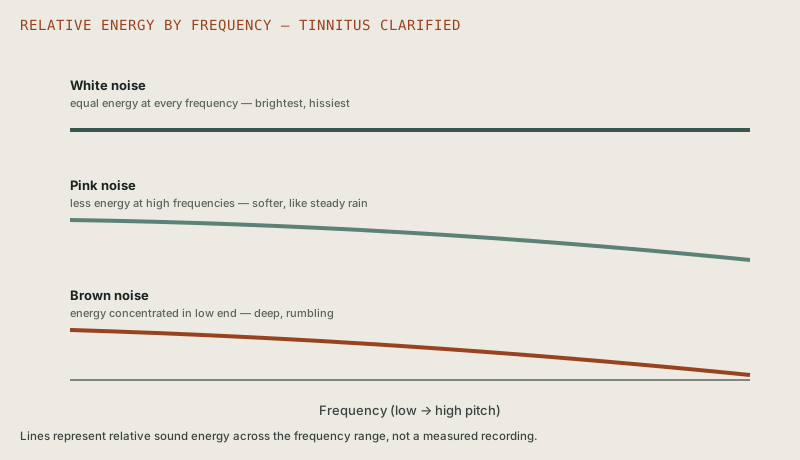
White noise has equal energy at every frequency — mathematically the simplest of the three, and the reason it sounds the brightest and hissiest of the group, similar to television static or a radio between stations.
Pink noise reduces energy at higher frequencies relative to white noise, so more of its energy sits in the lower and middle range. It sounds noticeably softer and less harsh than white noise, closer to steady rainfall or wind.
Brown noise (sometimes called red noise) reduces high frequencies even further than pink noise, concentrating most of its energy in the low end. It sounds deep and rumbling — closer to a distant waterfall, ocean surf, or a low mechanical hum than anything hissy.
Which one to actually try first
There's no single correct answer — this genuinely comes down to your specific tinnitus pitch and personal preference, which is exactly why this site's sound library includes all three rather than picking one as the default. A few practical starting points:
- If your tinnitus is high-pitched (a common pattern, especially with noise-induced or age-related hearing loss), brown or pink noise is often preferred, since white noise's bright, hissy character can sit close to the same frequency range as the tinnitus itself and feel harsh rather than soothing alongside it.
- If your tinnitus is lower-pitched or you're not sure, white or pink noise is a reasonable starting point, since it covers a broader frequency range.
- For sleep specifically, brown noise is a common favorite — its low, rumbling character tends to feel less mentally stimulating than brighter noise, which matters at bedtime.
- For daytime focus or masking in a busy environment, pink or white noise often cuts through ambient background sound more effectively than brown noise's lower frequencies.
Why matching pitch isn't an exact science
In principle, sound therapy works best when the background sound has energy near your tinnitus's own pitch, which is part of the reasoning behind notched sound therapy (covered in the sound therapy article) — a more precisely tuned approach than simply picking a noise color, and available as a free pitch-matching tool on this site if you want to try it. In practice, most people don't know their exact tinnitus pitch without a formal pitch-matching test at an audiology appointment, which is why trying each of the three colors directly and noticing which one feels most soothing is a completely reasonable, evidence-consistent way to choose without needing that test first.
It's fine to switch, and fine to prefer more than one
Plenty of people use different noise colors in different situations — brown noise at night, pink noise while working, white noise while traveling. There's no evidence that switching between them reduces effectiveness or that you need to commit to one permanently. If a color that used to help stops feeling as effective, trying a different one is a reasonable, low-cost thing to do before assuming sound therapy generally isn't working for you.
Worth being honest about: even the sleep-specific claims for these noise colors are less settled than marketing around them suggests. Pink noise in particular has been promoted heavily as a sleep aid based on earlier small studies, but more recent research (including a study sponsored by the US Federal Aviation Administration examining pink noise against intermittent aircraft noise) found it could actually disrupt sleep quality in some conditions rather than improve it. This doesn't mean pink noise is bad for sleep — the evidence is genuinely mixed and context-dependent, not settled in either direction — but it's a reason to trust your own experience over a specific color's marketed reputation if what you notice personally doesn't match the hype.
Beyond the three main colors
Nature sounds, campfire crackle, fan hum, and similar textures — also available in this site's sound library — are, acoustically, generally variations built from these same underlying noise principles (filtered and shaped noise, sometimes layered with rhythmic elements) rather than something fundamentally different. If none of the three core colors feels right, one of these more textured options is worth trying before concluding that background sound generally isn't for you.
Getting started
This site's sound library generates all three noise colors live in your browser, along with a range of other textures, free and with no download or account required — a practical way to compare white, pink, and brown noise directly against your own tinnitus before deciding which one to build into a nightly or daily routine.
Sources
Frequently asked questions
Which noise colour is best for tinnitus?+
There is no single correct answer — it depends on your tinnitus pitch and personal preference. If your tinnitus is high-pitched, which is common with noise-induced and age-related loss, brown or pink noise is often preferred because white noise's bright hissy character can sit close to the tinnitus frequency and feel harsh. If it is lower-pitched or you are unsure, white or pink is a reasonable start.
What is the actual difference between white, pink and brown noise?+
How sound energy is spread across frequencies. White noise has equal energy at every frequency, which makes it the brightest and hissiest — like television static. Pink noise reduces the higher frequencies, sounding softer, closer to steady rainfall. Brown noise cuts the highs further still and concentrates energy at the low end, sounding deep and rumbling, like distant surf.
Is pink noise proven to help sleep?+
Less settled than the marketing suggests. Pink noise has been promoted as a sleep aid on the strength of earlier small studies, but more recent research — including an FAA-sponsored study examining pink noise against intermittent aircraft noise — found it could disrupt sleep quality in some conditions. The evidence is genuinely mixed and context-dependent, which is a reason to trust your own experience over a colour's reputation.
Related reading
treatments
Sound Therapy for Tinnitus: What the Evidence Shows
White noise, notched sound therapy, and hearing aids as tinnitus management tools — what each does, and where the evidence is strong versus preliminary.
5 min read
treatments
Best White Noise Machines for Tinnitus: A Real Comparison
LectroFan Classic, LectroFan EVO, Yogasleep Dohm, HoMedics SoundSleep — actual specs, prices, and which sound profile fits tinnitus masking best.
4 min read
treatments
Residual Inhibition: When Tinnitus Goes Quiet After Sound
Roughly a third of people find their tinnitus briefly disappears after the right sound stops. What that proves, what it doesn't, and why it isn't yet a treatment.
4 min read
treatments
Tinnitus Masking Apps: Do They Actually Help?
Dozens of apps promise tinnitus relief through sound. What they're actually doing, and how to spot a genuinely useful one.
4 min read
White Noise vs. Pink Noise vs. Brown Noise for Tinnitus — https://www.tinnitusclarified.com/articles/white-pink-brown-noise-comparison
Published 2026-07-30, updated 2026-09-03. Every claim on this page cites a named source; the full list is above.
How this page is maintained
Every factual claim above is tied to one of the 2 named sources listed on this page, last checked . How we decide what to publish explains what counts as a source here and what does not.
When we get something wrong we say so on the corrections page rather than editing it away quietly. If something on this page looks wrong to you — a number, a citation, a claim that has been superseded — tell us, and say which sentence.
Tools & resources
Free tool
Pitch match & notched sound therapy
Find your tinnitus's exact pitch and generate a free notched therapy sound tailored to it.
Free tool
Coping plan builder
Turn what you've just read into a concrete, personal plan — saves automatically, no account.
Research library
Every source cited on this site
The primary studies behind this article and every other, aggregated in one place.