Superior Canal Dehiscence Syndrome and Tinnitus
Superior canal dehiscence syndrome (SCDS) is genuinely rare — affecting an estimated 0.7% of people, based on imaging studies — but it produces a symptom pattern distinctive enough that it's worth knowing about, since the symptoms are easy to misattribute to something else entirely.
What's actually happening
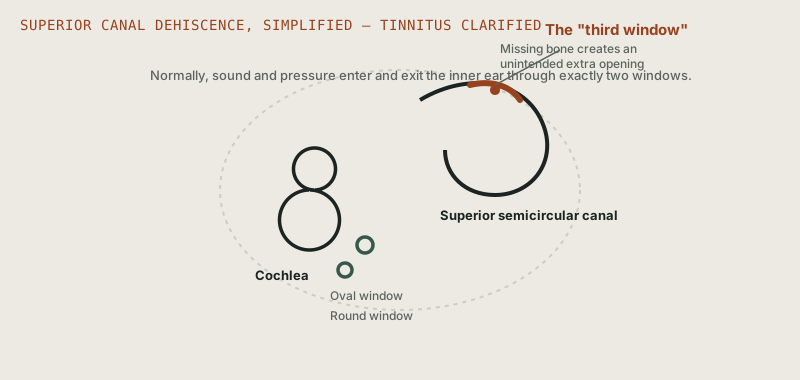
Normally, the inner ear's fluid-filled canals are fully enclosed in bone. In SCDS, a thin section of bone over the superior semicircular canal — one of the balance structures — is missing or abnormally thin, creating what researchers call a "third window": an unintended additional pathway for sound and pressure to affect the inner ear, alongside the two normal windows sound is supposed to travel through. That extra pathway is what produces the syndrome's unusual symptoms.
The distinctive symptom pattern
What sets SCDS apart from more common tinnitus causes is a specific cluster of symptoms tied to the "third window" mechanism:
- Sound-induced vertigo (called the Tullio phenomenon) — dizziness or a spinning sensation triggered specifically by loud sounds
- Pressure-induced vertigo — triggered by straining, coughing, sneezing, or changes in ear pressure
- Autophony — hearing your own voice as unusually loud, echoing, or distorted inside your head
- Hearing internal body sounds — your own heartbeat, footsteps, bowel sounds, or even your eye movements, at a volume that seems impossible until you learn about this condition specifically
- Pulsatile tinnitus and general aural fullness
- Often, low-frequency hearing loss and hyperacusis on the affected side
Not everyone with SCDS has every symptom, and some cases are found incidentally on imaging without significant symptoms at all — but the specific combination of sound- or pressure-triggered vertigo alongside hearing internal body sounds is distinctive enough that most other tinnitus causes wouldn't produce it.
SCDS is the best-known member of a family. A perilymph fistula is the other one worth knowing: a leak rather than a hole in the bone, but the same underlying problem of an inner ear that has acquired an opening it was not built with. It produces the same pressure sensitivity, and one of the causes the reviews list for it is otic capsule dehiscence — which is what SCDS is.
Why this one is easy to miss
Because SCDS symptoms overlap with several other inner ear conditions — including Ménière's disease and general pulsatile tinnitus — and because "I can hear my own eyeballs move" sounds implausible even to people experiencing it, this condition often goes undiagnosed for years, sometimes described in case reports as a multi-year history before an accurate diagnosis was reached. Symptoms are also frequently worse during upper respiratory infections, which can further muddy the picture if it's mistaken for a recurring ear infection.
How it's diagnosed
Diagnosis relies on a combination of the specific symptom pattern, a clinical exam finding called nystagmus (a distinctive eye-movement response to loud sound or pressure changes), vestibular testing (VEMP), and confirmation with high-resolution CT imaging of the temporal bone, which can directly visualize the bony gap.
Treatment
Mild cases without significantly disabling symptoms are often simply monitored rather than treated. For more severe, disruptive symptoms, surgical repair of the bony defect (plugging or resurfacing the dehiscence) is the definitive treatment and is generally reserved for cases where symptoms significantly affect daily life, given that it's a more involved procedure than most other tinnitus-related interventions on this site.
When to consider it
If your tinnitus specifically comes with sound- or pressure-triggered dizziness, unusually loud perception of your own voice or bodily sounds, or vertigo triggered by straining or loud noises, that combination is worth describing precisely to an ENT or neurotologist — it's a specific enough pattern that naming it accurately can meaningfully speed up getting the right diagnosis. It is also worth naming because SCDS is one of the structural causes on the short list of tinnitus that can genuinely be cured — repairable in selected cases, against a background where the honest answer for ordinary chronic tinnitus is that it is managed rather than resolved.
Sources
Frequently asked questions
What makes SCDS different from other causes of tinnitus?+
The third-window mechanism produces a symptom cluster most other causes do not: vertigo triggered specifically by loud sound (the Tullio phenomenon) or by straining, coughing and sneezing; hearing your own voice as unusually loud or echoing; and hearing internal body sounds — heartbeat, footsteps, bowel sounds, even eye movements. Not everyone has every symptom, but sound- or pressure-triggered vertigo together with audible body sounds is distinctive enough to name precisely to an ENT.
How is superior canal dehiscence diagnosed?+
By combining the symptom pattern with a clinical exam finding called nystagmus — a distinctive eye-movement response to loud sound or pressure change — vestibular testing (VEMP), and a high-resolution CT of the temporal bone, which can directly visualize the gap in the bone.
Does SCDS always need surgery?+
No. Mild cases without significantly disabling symptoms are often simply monitored, and some dehiscences are found incidentally on imaging in people who have no meaningful symptoms at all. Surgical repair of the defect, by plugging or resurfacing it, is the definitive treatment but is generally reserved for symptoms that significantly affect daily life, since it is a more involved procedure than most other tinnitus-related interventions.
Related reading
causes
Autoimmune Inner Ear Disease and Tinnitus
A rare but urgent cause of tinnitus and hearing loss — AIED progresses over weeks, and early treatment is what determines whether hearing can be saved.
4 min read
causes
Perforated Eardrum and Tinnitus: How Long It Actually Lasts
A ruptured eardrum usually heals in weeks, and tinnitus typically resolves right along with it. Real healing-time data, and when it needs more than time.
4 min read
causes
Otosclerosis Explained: A Less Common Cause of Tinnitus
An inherited bone condition in the middle ear causes both hearing loss and tinnitus in most people who have it — and surgery often improves both.
3 min read
causes
Ear Candling and Tinnitus: Why It Doesn't Help, and Can Hurt
The FDA has documented burns and perforated eardrums from ear candling. What it actually does to your ear, and why it can cause the tinnitus it claims to fix.
4 min read
Superior Canal Dehiscence Syndrome and Tinnitus — https://www.tinnitusclarified.com/articles/superior-canal-dehiscence
Published 2026-05-21, updated 2026-09-03. Every claim on this page cites a named source; the full list is above.
How this page is maintained
Every factual claim above is tied to one of the 3 named sources listed on this page, last checked . How we decide what to publish explains what counts as a source here and what does not.
When we get something wrong we say so on the corrections page rather than editing it away quietly. If something on this page looks wrong to you — a number, a citation, a claim that has been superseded — tell us, and say which sentence.
Tools & resources
Free tool
Tinnitus impact self-check
See how much tinnitus is actually affecting daily life, mood, and coping — 2 minutes, free.
Free tool
Online hearing test
A free tone-based check across standard audiometric frequencies, ear by ear.
Research library
Every source cited on this site
The primary studies behind this article and every other, aggregated in one place.